Reclaim the Margin
One self-funded idea, pivoted across three forms until it retained
One idea, three forms, two platforms abandoned — until it stopped being a luxury and started being survival.
I funded, designed, and built this myself — concept through Kickstarter through ship. Across its life it was a web service, then a mobile game, then a tabletop game. What stayed constant was the core idea: turning your inner life — what you want, what you’re carrying, what you’re trying to protect — into something you actively play rather than passively manage. What changed, twice, was the form. The reason it had to change is the whole story.
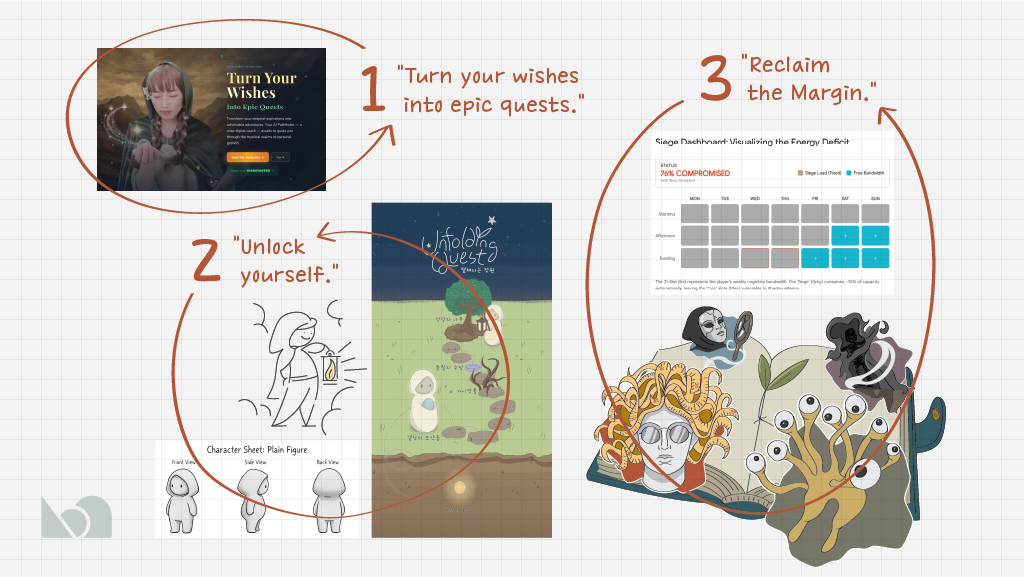
Form one: “your wishes become quests.”
It started as a coaching web service — you’d name what you wanted, and the system turned those wishes into quests to pursue. It worked on paper and didn’t in practice: most players didn’t return after the first session. I assumed at first I’d built it wrong, and spent a while fixing surfaces before I accepted that wasn’t it. Low retention rarely means the thing is broken — more often the reason to come back just isn’t strong enough. So I started treating the concept as a hypothesis to test rather than a product to defend.
Form two: “tend your garden of inner thoughts.”
My first real bet was that the core was sound and just needed more pull, so I rebuilt it as a mobile game — the concept as a garden of your inner thoughts that you tend over time. There were signs of life: I showed it at the Daegu Content & Creator Fair in 2025, and one visitor came back to the booth a second time the same day. But the more useful result was what players said around it. The recurring word was luxury. Something nice to have. An indulgence.
That word reframed the whole problem — and the metaphor had been telling me the same thing in advance. A garden you tend is a luxury: optional, aspirational, the first thing dropped from a busy life. The booth revisit was real pull, but it was the pull of something pleasant, not something needed — and pleasant doesn’t retain. I’d gamified the concept but kept its motivation aspirational, and the aspiration was the retention problem all along. Polish doesn’t fix “optional”; it just makes a luxury nicer. I’d changed the format and preserved the exact thing that was broken.
Form three: “reclaim the margin.”
So I stopped changing the form and changed the stakes. I kept the core concept and rebuilt it a third time, now as a tactical survival solo TTRPG. You start with almost nothing — three margin slots out of twenty-one — and the whole game is the fight to win the rest back without losing what you’ve clawed up. That structure runs two motivations at once: the pull of reclaiming what you’re missing, and the fear of giving back what you’ve earned. Aspiration is easy to postpone; a deficit you’re actively climbing out of, with every gain now at risk, is not. Survival and loss-aversion create a reason to come back that “this is enjoyable” never will.
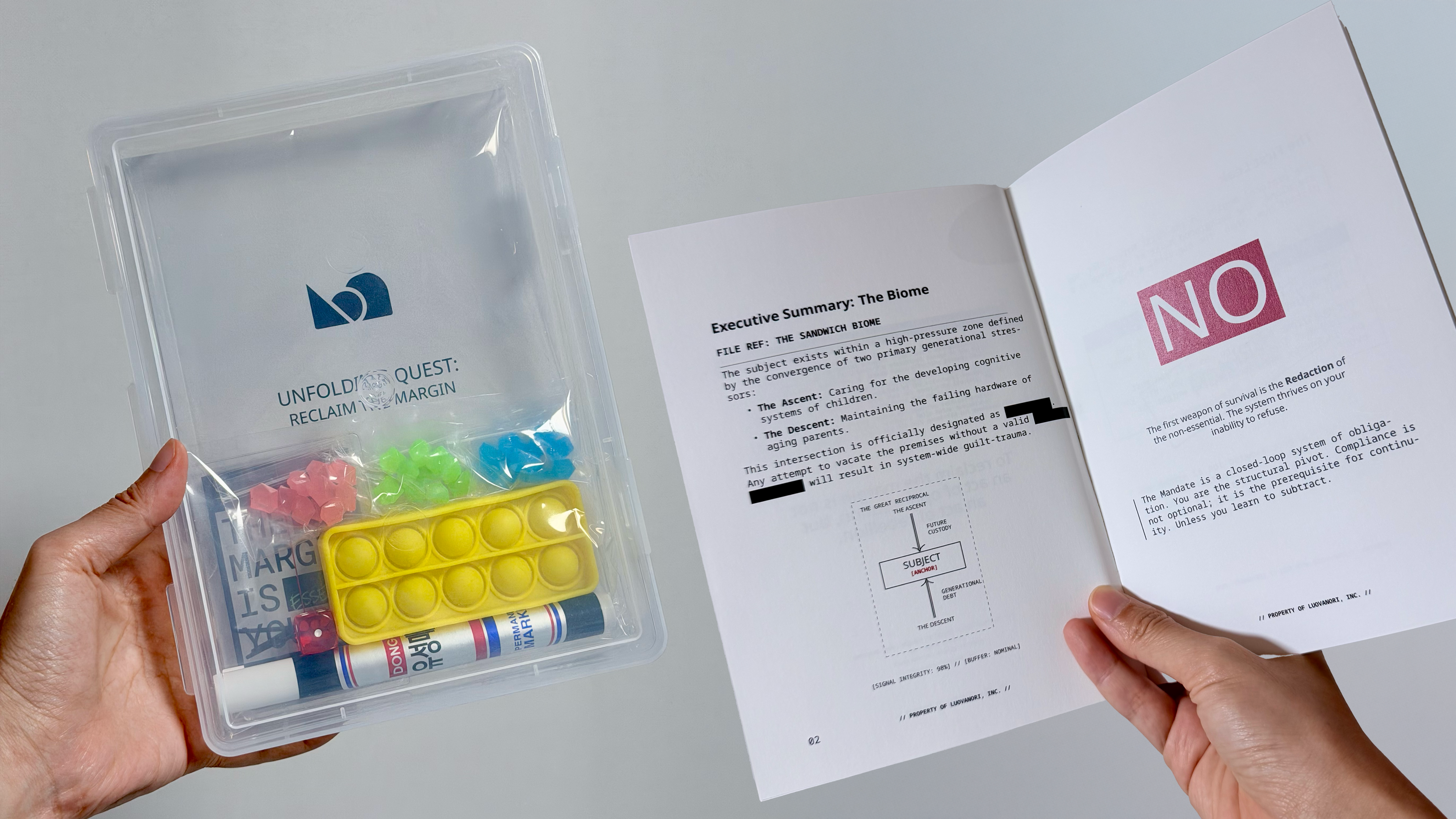
What shipped.
The survival version is what I took through Kickstarter and shipped: $1,000 funded and more than 30 copies sold. Modest numbers — and that’s the point. They represent the whole loop closed by one person across three platforms: concept, two pivots, funding, and a finished game in players’ hands.
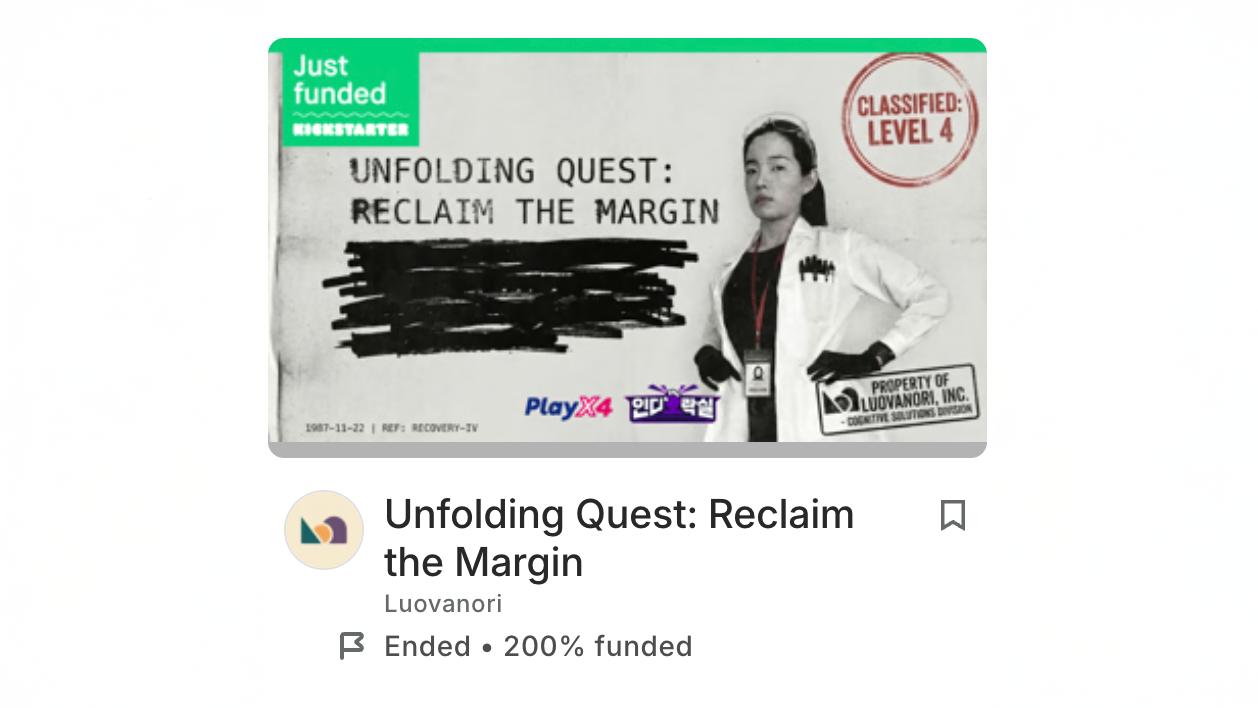
The softer signal was booth behavior, and I want to be precise about what it was: not a measurement, just something I noticed across two events a year apart. In 2025 the garden version drew a single visitor back a second time. In 2026 I showed the survival version at PlayX4 and saw several visitors make return trips to the booth. Two different games, two different crowds, so it’s anecdotal — but the direction lined up with the bet: the version built to pull people back seemed to.
What I’d do differently.
I’d test the motivation before rebuilding the form. I changed platforms twice — web to mobile to tabletop — while carrying the same aspirational framing through each one, and that framing was the real problem the whole time. I was loyal to the right thing (the concept) and slow to question the thing I should have (why anyone comes back). Now I pressure-test the reason for return before I invest in what they return to.